
Blogs
Are Cream Chargers Recyclable? Your Guide to Eco-Friendly Disposal
Jan
Contents
- Introduction
- What Are Cream Chargers Made Of?
- Are Cream Chargers Recyclable?
- How to Recycle Cream Chargers: Step by Step
- Can You Put Cream Chargers in the Recycling Bin?
- Recycling Large N2O Cylinders
- Environmental Benefits vs Aerosol Cans
- Our Sustainability Commitment
- Tips for Reducing Your Environmental Footprint
- What NOT to Do
- Frequently Asked Questions
Introduction
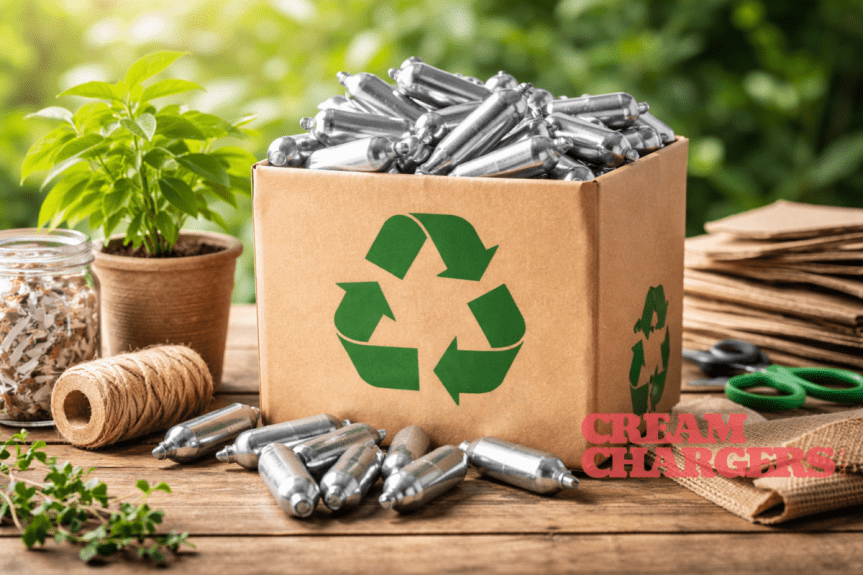
If you’re a fan of whipped cream, nitrous oxide-powered desserts, or professional kitchen applications, you’ve likely wondered about the environmental impact of cream chargers. The good news? Yes, cream chargers are fully recyclable. In an era where sustainability matters more than ever, understanding how to properly dispose of these small but valuable metal containers is crucial for both home cooks and commercial establishments.
This comprehensive guide explores everything you need to know about recycling cream chargers responsibly. From understanding what they’re made of to following proper disposal procedures, we’ll walk you through the process and highlight why recycling these chargers makes a real environmental difference.
Key Takeaway
Cream chargers are made primarily of steel and are one of the most environmentally friendly disposable products on the market—provided they’re recycled correctly.
What Are Cream Chargers Made Of?
To understand why cream chargers are recyclable, it’s important to first understand their construction. Most cream chargers on the market today are made from 100% recyclable steel or stainless steel, depending on the manufacturer.
Steel Construction
The chargers you purchase consist of a seamless steel cartridge filled with food-grade nitrogen gas (N2O). The steel shell is designed to withstand pressure whilst remaining lightweight and portable. This construction makes them inherently recyclable—there are no plastic components, complex composites, or multi-material assemblies that make recycling difficult.
Quality Brands and Standards
Leading manufacturers like Mosa and other premium brands prioritise recyclable materials in their production. These brands commit to environmental standards, ensuring that every charger they produce is fully recyclable and poses no environmental hazard when properly disposed of.
Whether you purchase standard steel chargers or premium stainless steel variants, both are designed with the end-of-life recycling process in mind. This is a significant advantage over many disposable products on the market today.
Are Cream Chargers Recyclable?
Absolutely, yes. Cream chargers are not just recyclable—they’re one of the easiest and most efficient products to recycle. Here’s why:
Steel: One of the Most Recycled Materials on Earth
Steel is the world’s most recycled material by mass. Globally, more steel is recycled than all other materials combined. This isn’t by accident—steel is infinitely recyclable. When melted down and reformed, steel loses absolutely none of its properties or strength. A steel charger can be recycled and reformed into a new charger, or repurposed into completely different products like automotive parts, building materials, or appliances.
No Quality Loss
Unlike some materials that degrade with each recycling cycle, steel maintains its integrity indefinitely. This means your recycled cream charger could become part of a bridge, a car, or a new appliance—all at full quality standards.
Economic Incentive
Steel has genuine scrap value. This economic incentive ensures that recycling infrastructure is robust across the UK and beyond. Most waste management facilities actively seek out steel items because they’re valuable—they’re not simply accepted; they’re wanted.
Did You Know?
The recycling process for steel uses approximately 74% less energy than producing new steel from raw ore. By recycling your cream chargers, you’re actively reducing carbon emissions.
How to Recycle Cream Chargers: Step by Step
Proper disposal of cream chargers is straightforward. Follow these steps to ensure you’re recycling safely and responsibly:
Ensure the Charger is Fully Used and Empty
Before recycling, make absolutely certain the charger contains no remaining gas. The best way to verify this is to use your cream dispenser to release all remaining gas. You can also gently press the charger against your dispenser’s pin and listen for any hissing sound. There should be complete silence.
Check for Residual Pressure
After attempting to discharge all gas, give the charger a final check. Hold it near your ear (at safe distance) and listen carefully. Any hissing indicates remaining pressure. If you hear hissing, continue using the charger or dispose of any residual gas using your dispenser. Never attempt to puncture or damage the charger yourself.
Place in Your Household Metal Recycling Bin
Once you’ve confirmed the charger is empty, it can go directly into your household metal or mixed recycling bin. Most UK councils accept small steel items without any special requirements. Check your local council’s guidelines to confirm—most regions treat cream chargers the same as other small metal items like aluminium cans.
For Businesses: Use Commercial Metal Waste Collection
If you operate a commercial kitchen or hospitality business using cream chargers in high volume, arrange commercial metal waste collection with a waste management provider. They’ll supply secure containers for your spent chargers and collect them regularly. This approach is not only more responsible but often more cost-effective than household recycling for high-volume users.
Can You Put Cream Chargers in the Recycling Bin?
Yes—in most cases. The vast majority of UK councils accept cream chargers in standard household metal recycling bins. However, recycling policies vary by region, so it’s worth checking your local council’s website to confirm.
What Most UK Councils Accept
Most councils explicitly state they accept “small metal items” or “small steel items” in their mixed recycling collections. Cream chargers fall squarely within this category. As long as:
- The charger is completely empty (no residual gas)
- It’s a small domestic-sized charger (not a large 580g+ cylinder)
- Your council accepts mixed metals
…then your chargers can go directly in your standard recycling bin.
If Your Council Requires Scrap Metal Drop-Off
A small percentage of UK councils don’t accept small metal items in standard recycling. If this applies to your area, you have an alternative: most scrap metal recyclers welcome cream chargers and will often accept them for free or minimal cost due to their scrap value. Simply visit your nearest scrap metal facility with your empty chargers.
To find scrap metal recyclers near you, search “metal recycling near me” or visit your council’s waste disposal website for recommendations.
Pro Tip
Keep your empty chargers in a dedicated container as you use them. When you’ve accumulated a reasonable quantity, you can take them all at once to your preferred recycling method. This is more convenient than making a trip for just one or two chargers.
Recycling Large N2O Cylinders
Larger N2O cylinders—typically 580g or 615g sizes—follow the same recyclability principles as their smaller counterparts but require slightly different handling due to their size.
Material and Recyclability
Large cylinders are constructed from the same recyclable steel as standard chargers. They’re equally sustainable and fully recyclable. The only difference is that due to their size, they won’t fit in standard household recycling bins.
Disposal Methods for Large Cylinders
For larger cylinders, your best option is to take them directly to a scrap metal recycler. Most scrap yards actively accept large steel cylinders and may even offer payment based on current scrap rates. This is ideal for commercial users or serious enthusiasts with multiple large cylinders to recycle.
Alternatively, if your local council operates a household waste recycling centre (HWRC), contact them to confirm they accept large metal cylinders. Many do, and your chargers can be recycled for free through this service.
Never Return to Supplier?
Unlike traditional refillable gas cylinders, disposable cream chargers and large cylinders are not returned to suppliers. Instead, they’re designed for single use and subsequent recycling through standard metal waste streams.
Environmental Benefits of Cream Chargers vs Aerosol Cans
When comparing the environmental impact of cream chargers to other delivery methods like aerosol whipped cream cans, the differences are significant.
| Factor | Cream Chargers | Aerosol Cans |
|---|---|---|
| Material Composition | Single material: steel only | Multi-material: steel, plastic cap, rubber seal |
| Recycling Complexity | Simple—direct metal recycling | Complex—requires separation and specialist handling |
| Propellant Content | Food-grade N2O (non-toxic) | Hydrocarbon propellants (hazardous) |
| Production Emissions | Lower—minimal processing | Higher—multi-material assembly |
| Packaging Waste | Minimal per use (reusable dispenser) | Significant per use (disposable can) |
| Weight & Transport | Lightweight, efficient transport | Heavy, less efficient distribution |
| Infinite Recyclability | Yes—steel never degrades | Limited—multi-material complexity |
The Verdict
Cream chargers emerge as the environmentally superior choice. Their single-material construction, infinite recyclability, and minimal packaging waste make them far more sustainable than aerosol alternatives. When you choose cream chargers and recycle them properly, you’re making an actively positive environmental decision.
Our Sustainability Commitment
At creamchargers.co.uk, we’re committed to supporting your sustainable choices. This commitment extends across every aspect of our business:
Brands We Stock
We prioritise stocking cream chargers from manufacturers who share our environmental values. Brands like Mosa lead the industry in sustainable production practices, using 100% recyclable materials and maintaining rigorous environmental standards throughout their supply chain.
Mosa’s Environmental Standards
Mosa, one of the world’s leading cream charger manufacturers, maintains ISO 14001 environmental management certification. This means their production facilities meet the strictest international environmental standards, from energy efficiency to waste reduction and sustainable sourcing.
Reducing Packaging Waste
Our packaging is designed with sustainability in mind. We use recycled cardboard and minimal plastic, and our chargers are shipped efficiently to reduce carbon footprint during transport. When your order arrives, the packaging itself is recyclable.
Our Promise
Every charger we sell is a sustainable choice. By purchasing from us and recycling properly, you’re supporting a circular economy that values our planet.
Tips for Reducing Your Environmental Footprint
Beyond simply recycling, there are additional steps you can take to minimise your environmental impact when using cream chargers:
1. Buy in Bulk
Purchasing cream chargers in bulk quantities (24, 50, or 100-packs) significantly reduces the amount of packaging per charger compared to smaller packs. Bulk purchases also mean fewer delivery trips, further reducing your carbon footprint.
2. Use Larger Cylinders for High-Volume Applications
If you’re a business or heavy home user, consider larger cylinders like 580g or 615g models. These provide more N2O per unit weight, meaning fewer chargers needed to achieve the same output and proportionally less waste.
3. Recycle Every Single Charger
Never dispose of cream chargers in general waste. Make it a habit to save them specifically for recycling. Even a few chargers add up—recycling 52 chargers per year (just one per week) prevents waste equal to dozens of aerosol cans from entering landfills.
4. Choose Brands with Environmental Certifications
Look for manufacturers with recognised environmental certifications like ISO 14001 or industry-specific sustainability credentials. These certifications demonstrate genuine commitment to environmental responsibility, not just marketing claims.
5. Share Your Dispenser
If you own a cream dispenser, you’re making a smart choice already. Quality dispensers last for years and accommodate all standard cream chargers. Share your dispenser with friends or family rather than each person purchasing their own—it’s more economical and reduces overall consumption.
Calculate Your Impact
By using cream chargers instead of aerosol cans and recycling conscientiously, you’re preventing approximately 40-50kg of mixed waste per year from landfills. Over a decade, that’s half a tonne of responsible waste management.
What NOT to Do
Proper recycling means understanding what not to do. Avoid these common mistakes:
Critical Safety and Environmental Mistakes
- Don’t throw in general waste. Cream chargers belong in metal recycling only. Never put them in standard rubbish bins.
- Don’t puncture manually. Never attempt to pierce or puncture a cream charger yourself, even if you believe it’s empty. This is dangerous and damages the charger’s recyclability. Always use your dispenser to safely release residual gas.
- Don’t incinerate. Never burn cream chargers or expose them to extreme heat. This is hazardous and prevents recycling.
- Don’t leave outdoors in poor conditions. Exposure to rust and weathering can compromise the charger’s integrity. Store spent chargers in a dry location until recycling.
- Don’t mix with other materials carelessly. Keep chargers separate from general waste. If putting them in mixed recycling, ensure they’re clearly visible and not buried in other materials.
- Don’t assume all disposal facilities are the same. Check your local council’s guidelines rather than assuming your neighbours’ recycling methods apply to you.
Frequently Asked Questions
+
Cream chargers are made of steel or stainless steel, not aluminium. Standard chargers use food-grade steel, whilst premium variants use stainless steel. Both are 100% recyclable through standard metal recycling streams. Steel is actually more recyclable than aluminium in many cases because recycling infrastructure for steel is more established globally.
+
In most UK councils, yes. The majority accept small steel items in mixed recycling bins. However, always check your specific council’s guidelines first, as policies vary by region. If your council doesn’t accept them in standard recycling, take them to a scrap metal facility instead.
+
Your recycled cream chargers are melted down and reformed into new products. Common destinations include new steel chargers (creating a truly circular loop), automotive components, structural steel for buildings, appliances, or machinery. Because steel is infinitely recyclable, your charger could become part of a car, bridge, or household appliance—all at full quality standards.
+
No. Always ensure cream chargers are completely empty before recycling. Any residual gas creates a safety hazard for waste management workers and recycling facility staff. Use your cream dispenser to safely release all remaining gas, then listen for hissing to confirm emptiness. Never attempt to puncture the charger manually.
+
Just two things: (1) Ensure the charger is completely empty using your dispenser, and (2) verify there’s no residual gas by listening for hissing sounds. Beyond that, no special preparation is needed. Don’t clean them, don’t remove labels, and don’t attempt any modifications. Simply place them in your recycling bin or take them to a scrap facility.
+
Yes, absolutely. Large cylinders are made from the same recyclable steel and are equally sustainable. However, due to their size, they won’t fit in household recycling bins. Instead, take them to a scrap metal recycler or your local household waste recycling centre (HWRC). Many facilities welcome large cylinders and may offer payment based on current scrap rates.
Ready to Make an Eco-Friendly Choice?
Discover our full range of recyclable cream chargers from trusted, environmentally-conscious manufacturers.
Shop Recyclable Cream Chargers
Free delivery on orders over £25 | Discreet packaging | 100% recyclable products
Browse Our Collections
Find everything you need for professional-quality whipped cream and culinary applications:
